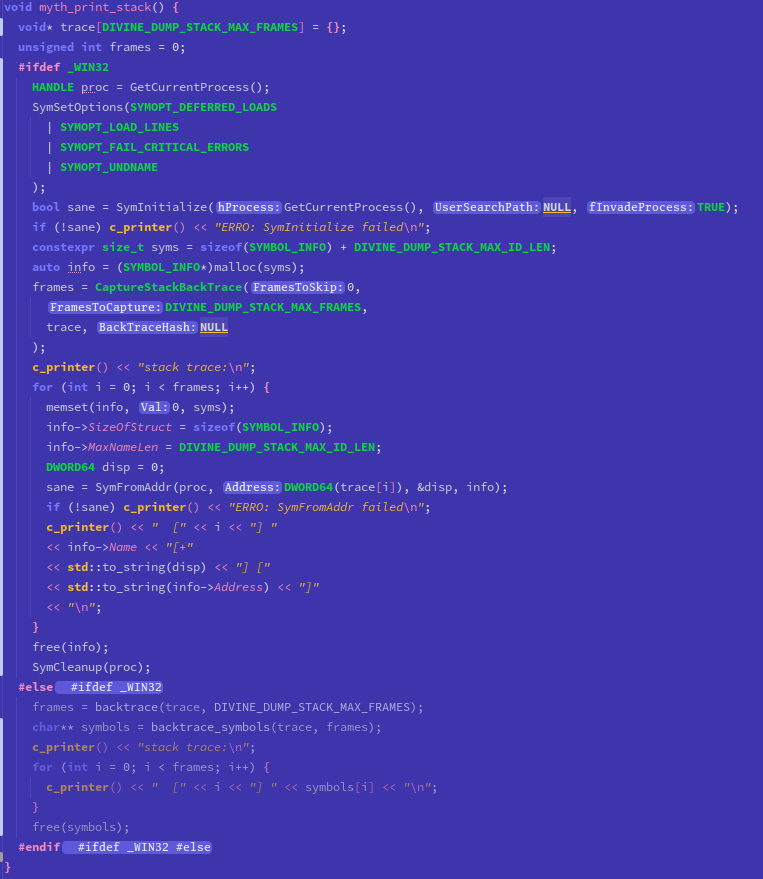
(re: attachment)
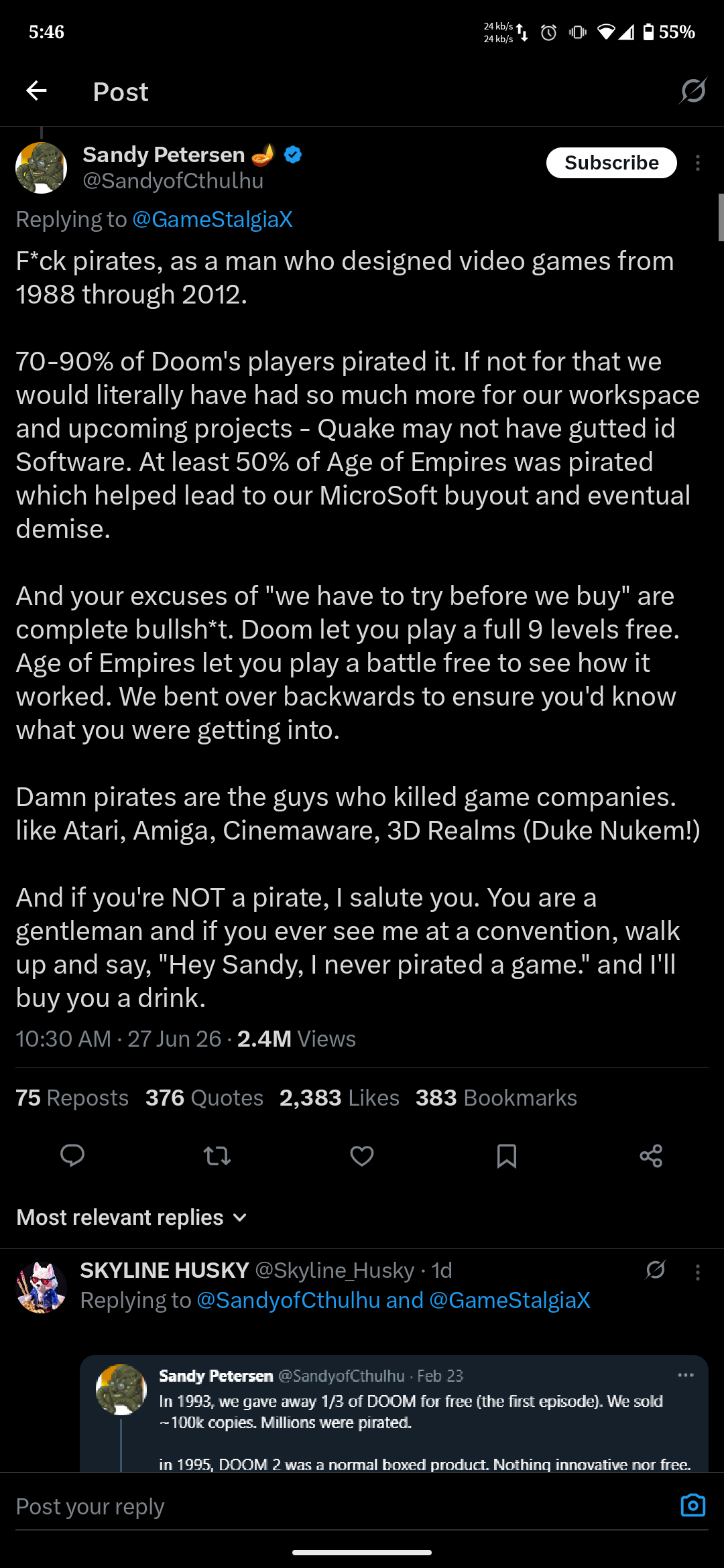
You've been in the industry long enough you should know better than this. Atari and Amiga were killed by their owners and the Microsoft+IBM monopoly. Not game piracy. Amiga Inc was not even a games company. Their leading product was hardware. Nobody wanted to own an Amiga computer because the IBM PC had caught up, was already in offices, had way more effective marketing, and the main audience interested in a multimedia computer already had their eyes on Nintendo and Sega. Commodore spent years flailing about, half-developing and throwing away different architectures, and not knowing who to sell Amiga hardware to. This is all VERY well documented.
DOOM's trial was under a shareware license. You got free marketing by being the most copied PC game in existence and benefitted greatly from it. 90% of people illegally copying the full version doesn't change that if you're outdoing Windows in install frequency.
Lastly, this additude is exactly why piracy exists. You need to directly and openly address the needs of people copying or they will not respect your boundaries. Games were always expensive, especially back then, and the internet changed the way distribution worked. People who illegally copy media today are also the biggest spenders. Let me tell you about myself. When I was a kid I didn't have money. I pirated shit all the time because it was the only way I was allowed to participate. Six years ago I pirated Cyberpunk 2077 because I did not want to pay full price for a game that was infamous for not working. I bought it months later because I liked it. I pirated dozens of movies because all of the easily accessible distribution methods are protected by Widevine malware, and the alternative is to spend way too much on a Bluray for my disc collection that I also don't own, and then decrypt it using a pirate program, which is illegal. If they didn't make being a customer so difficult, I wouldn't have done any of that. The story is the same for nearly everyone else you're pointing the finger at. To blame piracy is to completely ignore the factors which encouraged it, which can be tamed by the company who released the software if they have any theory of mind.
If you look up my Steam account today, I've spent thousands of dollars over the past decade on video games alone, and that's only on one store. Pirates are more than happy to pay for things that they want. If your game is being pirated, then that is something you are doing wrong.











![[?]](https://canithesis.org/ap/bonkmaykr/s/avatar-80051a0a9dd7090c6cae991452c7f522.png)
![[?]](https://icy.arcticfluff.eu/fileserver/01H7M8TDKTPK27P4XVHP29P8RT/attachment/original/01KVZXWNR0ESM79X8X8YR9X04P.webp)

![[?]](https://friends.ravergram.club/system/accounts/avatars/108/654/869/664/858/635/original/6904000df6a82e08.png)

![[?]](https://media.gameliberty.club/media/accounts/avatars/000/187/157/original/0c8cc2870aa6f510.png)
![[?]](https://s3.clubcyberia.co/pleroma/e9/a7/71/e9a77102e371064e086de65281529ab9405ec64e71866c2e9f488519118218d3.jpg)
![[?]](https://s3.clubcyberia.co/pleroma/66717e37d6162cfe9a05226743b7eb667564a26f6921266a3792c4077d827f9b.png)

![[?]](https://media.mathstodon.xyz/accounts/avatars/109/329/977/826/434/003/original/ad542ed16e0b31b6.png)


![[?]](https://friendica.eskimo.com/photo/profile/nanook.jpeg?ts=1702424615)
![[?]](https://mitra.pawslut.party/media/58c72803e57a2f88f00ba0d94631bb71816d3d16baf472b8f1e0a841aae83c5b.png)
![[?]](https://static.noauthority.social/accounts/avatars/111/755/126/496/287/802/original/b720c8ad7fd12dfd.jpg)
![[?]](data:image/png;base64, iVBORw0KGgoAAAANSUhEUgAAAEAAAABAAQAAAACCEkxzAAAAUUlEQVQoz43R0QkAMQwCUDdw/y3dwEvsvzlL4X1IoQkAisKmwfAFT3RgJHbQezpSRoXEqeqCL9BJBf7h3QbOCCxV5EVWMEMwG7K1/WODtlvxAYTtEsDU9F34AAAAAElFTkSuQmCC)


![[?]](https://netzsphaere.xyz/media/9b7bd163863bb2f097f890a2f76c530f687118ae0efaeb8626bd753cd724aed0.N7APNXYFK87E)
![[?]](https://s3.v5.yokai.cafe/blobcatfiles/b9a9c3b0473e34e98394dd89db7d56e6ebdc17d55aee147cdd9252dc522fb8e7.webp)
![[?]](https://files.ebiverse.social/i/webpublic-b30336ae-988f-4a5a-95aa-2d03922b974a.webp)

![[?]](https://s3.poster.place/drc/d34cde1df65cd5756adba15a9d14b01e33f253ad50a72a617151de7793ab32c7.jpg)
![[?]](https://cawfee.club/media/10740800388c8f2b840caa137b9fb160d58d4869cb3b8b7cf348ca8ea73f1071.jpg)
![[?]](https://media.bsd.cafe/bsdmmedia01/accounts/avatars/113/673/890/154/879/794/original/19e9c7fddf97bdbf.jpg)
![[?]](https://pl.slash.cl/media/eb/8d/28/eb8d28d659c5c181ba5c264cadaf3f3e0429688b7f3b17c1e857a8a9a9b6e4b0.blob)


![[?]](https://icy.arcticfluff.eu/fileserver/01PBM2P790ZZ12PKT1MC3KBHKH/attachment/original/01JW1MD4F1FEG8W9F541J98NRX.png)

![[?]](https://media.infosec.exchange/infosec.exchange/accounts/avatars/109/292/260/707/075/619/original/f1cd55f0a1c4c784.gif)


![[?]](https://cdn.masto.host/spaceyspace/accounts/avatars/110/784/492/672/678/185/original/78650d4117dcd4cb.png)
![[?]](https://pleroma.m68k.church/media/a0e639fa8943432ba8eb3020c86e179142a86a852fb686487106b853e9368f28.png)
![[?]](https://furry.engineer/system/accounts/avatars/110/627/452/088/518/077/original/489f95c069bfdc6a.png)

![[?]](https://files.mastodon.social/accounts/avatars/109/237/993/817/448/016/original/486ab80fcc48093c.jpg)
![[?]](https://fedi.derg.world/files/webpublic-0434bc36-6d77-4097-a584-c585432624b8.png)


![[?]](https://new.asbestos.cafe/media/d8/55/ec/d855ec4aa454461b44e7f026579bd481f3abc7d9c8706cd852556b58970a8940.OSKMP6Q9J1LX)


![[?]](https://cdn.social.linux.pizza/system/accounts/avatars/000/177/862/original/4dbd7d06e70f499c.png)
 SuperPacheFriend
  #WhiteBoySummer
![[?]](https://files.mastodon.social/accounts/avatars/109/521/032/613/939/160/original/6d6588cad807dfbc.png)
![[?]](https://i.poastcdn.org/93/0e/87/930e87be16dcc9254697b918cb2882abedf44c62cd3eca4cf317feadece46d53.jpg)
![[?]](https://media.shitposter.world/shitposter.club/d46698895a62ec3a5c8b6999f22aacaeafd0894e315b6d352fcef3a784f77a69.gif?name=_k1DZlmLJIgI_Q.gif)

![[?]](https://furville.drinkanddrive.africa/media/40a9ac454868e8ce660a3318accb67025065c1924c90e87007d59a8dda61d949.jpg)

![[?]](https://s3.clubcyberia.co/pleroma/ff/62/89/ff62894ecd966bc415722936ace770be1e598bcdd777130d41f1baf60022c375.webp)

![[?]](https://s3.clubcyberia.co/pleroma/bf/19/4c/bf194ca56a6dc5fbf0310853603a962616530fac2462c1ce13810fdd2591c2d0.png)
![[?]](https://nekosat.work/media/f1820deb-8424-4070-ae3b-cd67df5d1cf7/blob)

![[?]](https://shitpost.cloud/media/9d1edce4-9e78-44a8-81f3-3e339e27e6c6/dkntnpsiwmdb1.jpg)
![[?]](https://media.freerobuxextremist.com/media/36/7e/96/367e96b3f63b8720c9deb8fbedd4de576d0e2bc5f7bc65aca11dd1178e338e05.png)
![[?]](https://medias.meow.social/accounts/avatars/111/102/656/380/397/258/original/8f5d5bfcae35af91.png)


![[?]](https://media.shitposter.world/shitposter.club/26/54/5c/26545cad37c899e86dc82887253642f4899f52a1ba6be1c6c3a37d3f71146cda.blob?name=J3wKMzAolOUMag.blob)